
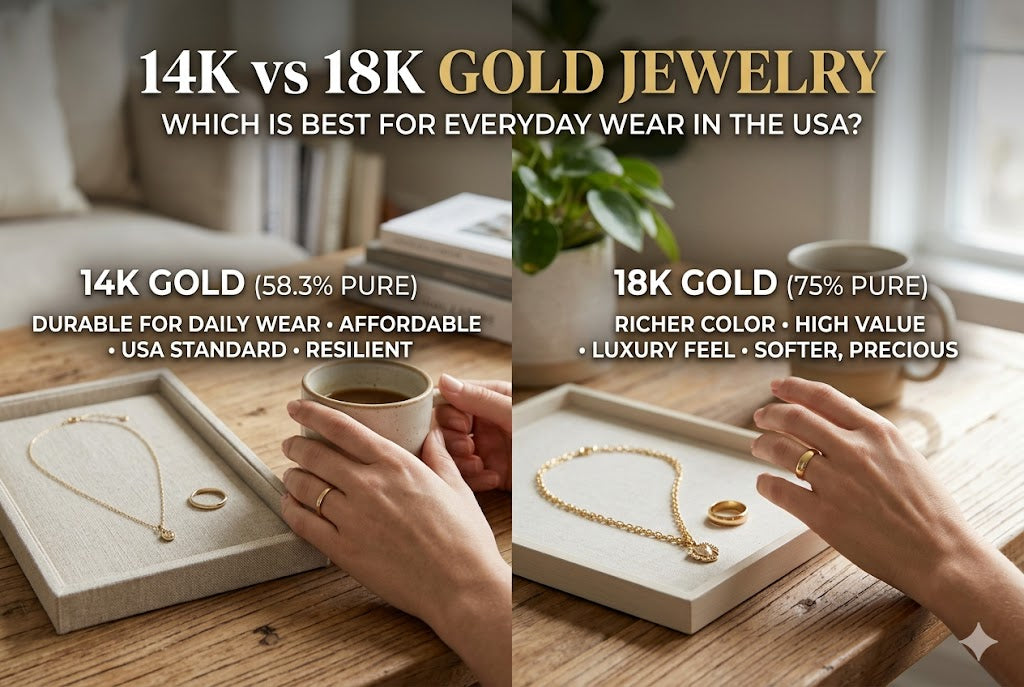
14K vs 18K Gold Jewelry – Which is Best for Everyday Wear in the USA?
Let's be honest — walking into a jewelry store can feel overwhelming. The display cases are sparkling, the sales associate is smiling, and suddenly you're staring at two nearly identical rings with very different price tags. One says 14K. The other says 18K. And you have absolutely no idea which one to pick.
Whether you're browsing at Zales, Kay Jewelers, or a cozy local boutique in Texas, the 14K vs 18K gold jewelry question comes up almost every time. And it's not a dumb question — it's actually one of the most important decisions you'll make when buying a piece you plan to wear for years. So before you swipe your card, let's talk through it together.
What's the Actual Difference Between 14K and 18K?
Here's something most people don't realize: the gold in your jewelry isn't 100% pure gold. Pure gold (24K) is gorgeous, but it's also incredibly soft — like, "bend it with your fingers" soft. That's why jewelers mix it with other metals like copper, silver, and zinc to make it strong enough to wear.
14K gold is 58.3% pure gold. 18K gold bumps that up to 75% pure gold.
That might sound like a small difference, but when you're comparing 14K vs 18K gold jewelry, that gap in gold content changes everything — the color, the feel, the durability, and especially the price tag.
Here in the USA, 14K is the go-to choice for most everyday jewelry buyers. Walk into any mid-range or chain jeweler, and the majority of their stock will be 14K. 18K tends to show up more in high-end boutiques and European luxury brands.
14K vs 18K Gold Durability — Which Holds Up Better?
This is the question that matters most — especially if you're someone who doesn't baby their jewelry.
Here's a truth that surprises a lot of people: 14K gold is actually tougher than 18K. Because it has more alloy metal mixed in, it's harder and more resistant to scratches, dents, and everyday damage.
Think about your life for a second. Are you someone who hits the gym before work, cooks dinner every night, forgets to take off your ring when you're gardening on weekends? Then 14K gold jewelry for daily wear was basically made for you. It handles real life — the messy, active, forgetful kind — without falling apart.
Now, is 18K gold too soft for daily use? Not exactly "too soft," but it does show wear faster. If you're the type of person who treats jewelry gently and takes it off before doing anything rough, 18K will be perfectly fine. But is 14K gold durable for everyday wear? One hundred percent yes — it's the most recommended option by American jewelers for a reason.
When it comes to 14K vs 18K gold durability, 14K simply wins for the everyday American lifestyle.
14K vs 18K Gold Price Difference in the USA
Nobody wants to overpay. So here's an honest look at the 14K vs 18K gold price difference in the USA:
| Jewelry Item | 14K Gold (Avg.) | 18K Gold (Avg.) |
|---|---|---|
| Simple Band Ring | $150 – $300 | $250 – $500 |
| Solitaire Engagement Ring | $800 – $2,500 | $1,500 – $4,000 |
| Gold Necklace (16") | $200 – $600 | $400 – $1,200 |
| Stud Earrings | $100 – $350 | $200 – $600 |
On average, you're looking at 30 to 50% more for the same piece in 18K. That's a significant jump. And for a lot of buyers — especially couples shopping for engagement rings — that extra money is better spent on the diamond or gemstone itself.
14K gold gives you genuine, beautiful gold at a price that doesn't make your stomach drop.
Which Gold Is Better for Engagement Rings?
Engagement rings sit right at the center of the 14K vs 18K gold jewelry debate, and for good reason — this is a ring you (or your partner) will wear every single day for the rest of your lives.
Most jewelers across the US lean toward 14K. It grips prong settings more tightly, which means your diamond is less likely to loosen over time. It resists daily scratching better. And it lets you stretch your budget further — which matters when you're also paying for a stone. 14K gold vs 18K gold ring durability is a real consideration, and 14K wins for a ring that needs to survive decades of daily wear.
That said, if your heart is set on a deep, warm yellow gold look? 18K delivers something 14K simply can't match — a richer, more vibrant color that looks undeniably luxurious. Weighing 18K gold jewelry pros and cons, that visual warmth is its biggest selling point. If color matters more than budget, 18K is worth considering.
Color, Skin Tone & Allergies — What Americans Should Know
One thing that gets overlooked: 18K gold jewelry pros and cons include more than just price and durability. 18K genuinely looks more "golden." That extra gold content gives it a warmer, deeper hue — and for yellow gold pieces especially, you can really see the difference side by side.
14K gold, with more alloy mixed in, can look a touch paler in yellow gold. In rose gold, though, most people can't tell the difference. And in white gold? Both look virtually the same once they've been rhodium-plated anyway.
One more thing worth mentioning — if you have sensitive skin or a nickel allergy, 18K may actually be kinder to your skin. Less alloy means fewer potential irritants. If you've had reactions to jewelry before, it's always worth asking your jeweler exactly what metals are in the alloy blend.
The Final Verdict: 14K vs 18K Gold Jewelry
Here's the honest truth about 14K vs 18K gold jewelry: there's no universally "better" option. But there is a better option for you.
If you live an active life, want real value for your money, and need jewelry that can keep up with your day — go with 14K. It's tough, it's beautiful, and it's what most American jewelry lovers choose every day.
If you're drawn to a richer color, have sensitive skin, or you're buying something special that won't face much rough treatment — 18K is worth the extra investment.
Either way, you're buying real gold. You're just choosing which gold fits your life best.
FAQ About 14K vs 18K Gold Jewelry
Is 14K gold actually good for everyday wear?
Absolutely. 14K gold jewelry for daily wear is the top recommendation from jewelers across the country. It's built to handle real life.
Will 14K gold turn my finger green?
Not if you buy from a reputable jeweler. Quality, hallmarked 14K gold won't discolor. Be cautious with cheap, unverified pieces that use poor alloys.
Is 18K gold worth the higher price?
Looking at 18K gold jewelry pros and cons — yes, if color and gold purity are priorities for you. For everyday rugged wear, 14K gives you better durability per dollar.
Which one holds its value better?
Since 18K has more gold content, it holds slightly more intrinsic value. But in the US resale market, both 14K and 18K gold are widely accepted and sell well.



