Mohs Hardness Scale Explained: The Complete Guide to Gemstone Durability and Jewelry Care
When you buy gemstone jewelry, it is not about how it looks. You also need to think about how the gemstone will hold up over time. This is especially true if you plan to wear the jewelry every day. The Mohs Hardness Scale is a way to measure how hard a gemstone is.
You might be looking for an engagement ring, a birthstone pendant, or maybe a gemstone bracelet. No matter what you are looking for, it is an idea to know about the Gemstone Hardness Scale. This will help you make a choice when you are spending your money.
We will tell you all about the Mohs Hardness Scale. We will explain what it is and how it works. We will also talk about why it's important for jewelry and how different gemstones are when it comes to being durable and resistant to scratches.
What Is the Mohs Hardness Scale?
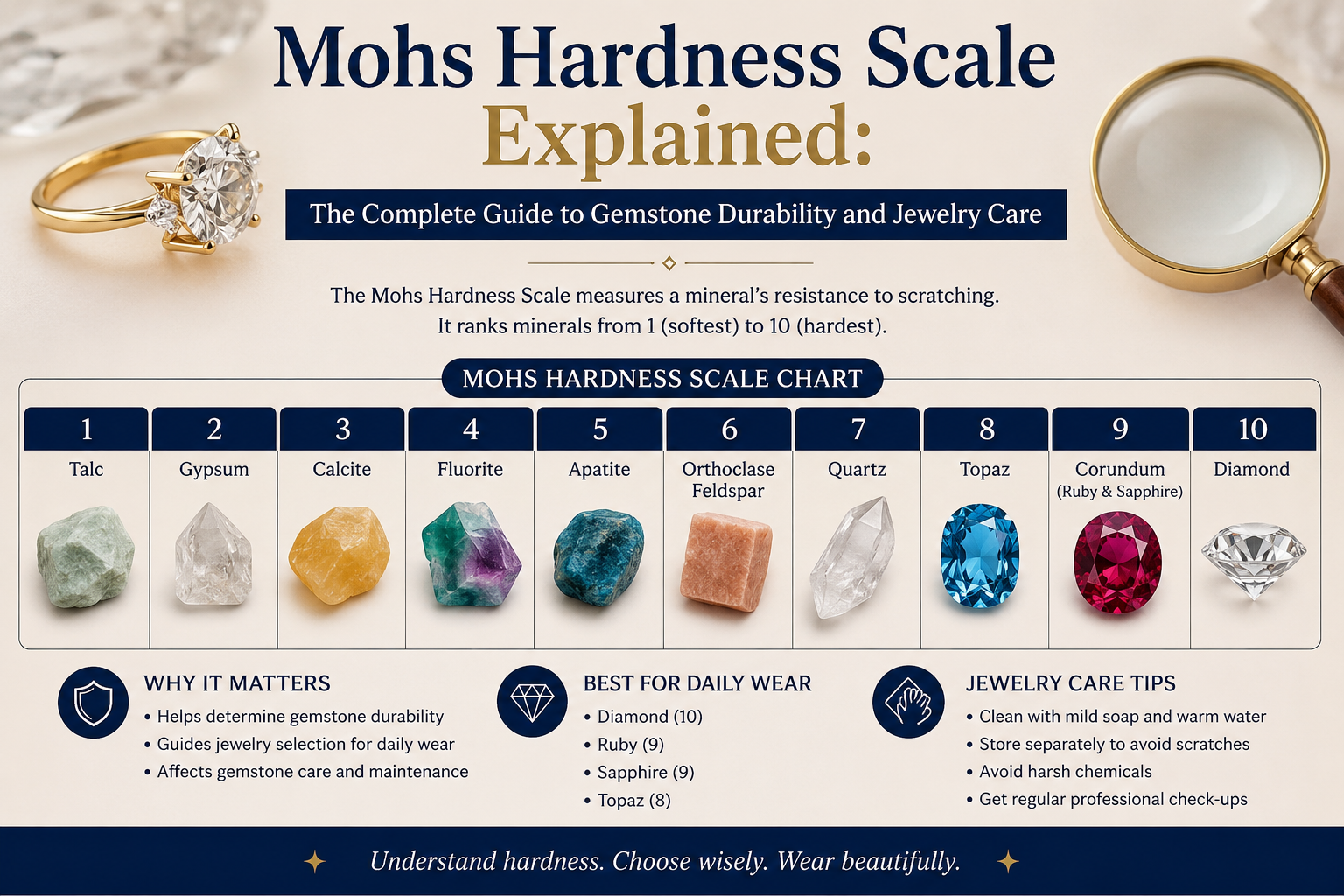
The Mohs Hardness Scale is a ranking system used to determine a mineral's resistance to scratching. Developed in 1812 by German geologist Friedrich Mohs, the Mohs Scale of Hardness ranks minerals from 1 to 10.
The scale begins with Talc at number 1. This is the mineral. The scale ends with Diamond at number 10. Diamond is the hardest naturally occurring substance on Earth. We are talking about the scale that measures the hardness of minerals, like Talc and Diamond.
Mohs Scale Chart
| Mineral | Mohs Hardness Rating |
|---|---|
| Talc | 1 |
| Gypsum | 2 |
| Calcite | 3 |
| Fluorite | 4 |
| Apatite | 5 |
| Orthoclase Feldspar | 6 |
| Quartz | 7 |
| Topaz | 8 |
| Corundum (Ruby & Sapphire) | 9 |
| Diamond | 10 |

The Mohs Scale Chart is really helpful when you want to know how strong a gemstone is. You can use the Mohs Scale Chart to pick the gemstones for the kind of jewelry you are making. The Mohs Scale Chart is about the Mohs Scale. It shows you which gemstones are okay for everyday jewelry and which ones are not. The Mohs Scale Chart is a tool to have when you are looking at gemstone durability, and the Mohs Scale Chart can help you choose the right stones for different kinds of jewelry.
Mohs Hardness Scale for Gemstones
The Mohs Hardness Scale for Gemstones is really helpful for people like jewelers and gemologists, and for people who buy gemstones. It tells them how well a gemstone can stand up to scratches that happen when you wear it every day. The Mohs Hardness Scale, for gemstones, is a way to figure out if a gemstone is strong enough to withstand daily wear.
Hardness is important. It is not the same thing as toughness. The hardness of something tells us how well it can resist scratches. On the other hand, the toughness of a material is about how well it can resist breaking or chipping. We need to think about the toughness and the hardness of the material, as two things.
For example:
-
Diamond has a hardness of 10, but it can chip under strong impact.
-
Jade has lower hardness but excellent toughness.
Understanding both factors is essential when evaluating Gemstone Durability.
Why the Gemstone Hardness Scale Matters
The Gemstone Hardness Scale is really important when it comes to how your jewelry will last. The Gemstone Hardness Scale determines this because it shows how well the Gemstone Hardness Scale can resist scratches and damage. So the Gemstone Hardness Scale plays a role in the life of your jewelry.
A harder gemstone:
-
Resists scratches better.
-
Maintains its polish longer.
-
Requires less maintenance.
-
Is ideal for everyday wear.
A softer gemstone:
-
Can develop scratches more easily.
-
Requires extra care.
-
Is better suited for occasional wear.
You need to know about the Gemstone Durability Guide. This is important when you want to buy jewelry. The Gemstone Durability Guide is what you should understand before you make a purchase. Buying jewelry can be a big deal, so you should know about the Gemstone Durability Guide.
Gemstone Hardness Chart with Examples
A Gemstone Hardness Chart with Examples helps buyers compare popular gemstones.
| Gemstone | Hardness |
| Opal | 5.5 - 6.5 |
| Tanzanite | 6 - 7 |
| Amethyst | 7 |
| Aquamarine | 7.5 - 8 |
| Morganite | 7.5 - 8 |
| Topaz | 8 |
| Sapphire | 9 |
| Ruby | 9 |
| Moissanite | 9.25 |
| Diamond | 10 |

This Gemstone Hardness Chart demonstrates why diamonds, rubies, sapphires, and moissanites are among the most durable choices for engagement rings.
How Hard Is a Diamond on the Mohs Scale?
People often ask, how hard is a diamond on the Mohs Scale?
The diamond is really hard; it ranks at 10 on the Mohs Hardness Scale. This makes the diamond the hardest natural mineral that we know of. The diamond is a hard mineral, and that is why it ranks so high on the Mohs Hardness Scale with a ranking of 10.
Because of its exceptional hardness:
-
Diamonds resist scratches from all other natural materials.
-
They maintain brilliance for decades.
-
They are ideal for daily-wear jewelry.
However, being hard does not mean something is indestructible. Diamonds can still chip if hit at angles.
Hardest Gemstones for Jewelry
When we are selecting gemstones for jewelry, it is really important to pick the right ones. This is especially true for things like rings and bracelets that get touched a lot. The hardest gemstones are the choice for jewelry that experiences frequent contact.
Diamond (10)
The ultimate choice for durability and brilliance.
Moissanite (9.25)
Offers excellent durability and affordability.
Ruby (9)
A classic gemstone known for exceptional toughness and vibrant color.
Sapphire (9)
Ideal for engagement rings and daily-wear jewelry.
Topaz (8)
Durable and available in various colors.
These are considered some of the Hardest Gemstones available in the jewelry market.
Scratch Resistance of Gemstones
The Scratch Resistance of Gemstones is one of the primary reasons jewelers use the Mohs system.
Examples:
-
Diamonds can scratch all other gemstones.
-
Rubies and sapphires resist most everyday scratches.
-
Opals require careful handling due to their lower hardness.
When you want to buy a gemstone, it is good to know about the scratch resistance of that gemstone. This helps you choose the right gemstone for you and the things you do. The scratch resistance of gemstones is important because it tells you how well the gemstone can handle your lifestyle and what you plan to use it for.
Mineral Hardness Scale and Mineral Hardness Test
The Mineral Hardness Scale is something that people usually figure out by doing a Mineral Hardness Test on the Mineral Hardness Scale itself. They do this test to learn more about the Mineral Hardness Scale. How it works with the Mineral Hardness Test.
A mineral hardness test involves attempting to scratch one mineral with another.
If Mineral A scratches Mineral B:
-
Mineral A is harder.
-
Mineral B is softer.
This simple principle forms the foundation of the Mohs Scale of Hardness used worldwide.
Precious Stone Hardness and Everyday Wear
When you are thinking about Precious Stone Hardness, you need to think about how you will wear the Precious Stone jewelry. This is because the Precious Stone jewelry will be used a lot if you wear it every day. The Precious Stone Hardness is very important in this case. You should consider the Precious Stone Hardness before you buy the Precious Stone jewelry.
Best for Daily Wear
-
Diamond
Suitable for Moderate Wear
-
Morganite
Occasional Wear Recommended
Knowing the hardness level helps preserve gemstone beauty for years.
Gemstone Durability Guide for Engagement Rings
An engagement ring is worn daily, making durability a major consideration.
This Gemstone Durability Guide recommends:
Excellent Choices
-
Diamond
-
Moissanite
-
Sapphire
Good Choices
-
Aquamarine
-
Morganite
High-Maintenance Choices
-
Opal
-
Pearl
Selecting durable gemstones reduces repair and replacement costs over time.
Mohs Hardness Scale and Jewelry Care
Knowing how the Mohs Hardness Scale works is important for taking care of your jewelry. The Mohs Hardness Scale is a part of jewelry care. If you want to keep your jewelry in condition, you should learn about the Mohs Hardness Scale and jewelry care. This way, you can protect the money you spent on your jewelry. The Mohs Hardness Scale and jewelry care go hand in hand.
Cleaning Tips
-
Use mild soap and warm water.
-
Avoid harsh chemicals.
-
Store gemstones separately.
Storage Tips
-
Keep diamonds away from softer gemstones.
-
Use individual jewelry pouches.
-
Avoid dropping gemstone jewelry.
Professional Maintenance
Have jewelry inspected annually to ensure settings remain secure.
Proper care extends the lifespan of even the most durable gemstones.
Difference Between Hardness and Toughness in Gemstones
Many buyers mistakenly assume hardness equals durability.
However:
Hardness
Measures scratch resistance.
Toughness
Measures resistance to breaking or chipping.
A complete understanding of Gemstone Durability requires evaluating both factors.
Also Read
10 Best Jewelry Gifts for June Birthdays in 2026
Best Gemstones for Daily Wear Jewelry
If you want jewelry that can withstand everyday activities, consider:
-
Diamond
-
Sapphire
-
Ruby
-
Moissanite
-
Spinel
These gemstones combine high hardness with excellent durability.
Final Thoughts On Mohs Hardness Scale
The Mohs Hardness Scale is really important if you want to buy jewelry with gemstones. When you are looking at diamonds, sapphires, rubies, or opals, you need to know about the Gemstone Hardness Scale so you can make choices.
You can use a chart that shows the hardness of gemstones, learn about the Mohs Scale of Hardness, and read a guide that tells you how well jewelry will last. This way, you can pick gemstones that fit your life and how much work you want to put into taking care of them.
The Mohs Hardness Scale, for gemstones, is a useful tool to understand how durable gemstones are, how hard precious stones are, and how well jewelry will perform over time. The Mohs Hardness Scale is still one of the ways to learn about Gemstone Durability, and the Mohs Hardness Scale is really helpful when you want to know about Precious Stone Hardness.
FAQs About the Mohs Hardness Scale
1. What is the Mohs Hardness Scale?
The Mohs Hardness Scale is a system used to measure a mineral or gemstone's resistance to scratching. Developed by Friedrich Mohs in 1812, the scale ranks minerals from 1 (softest) to 10 (hardest), with diamond being the hardest natural mineral.
2. How hard is a diamond on the Mohs Hardness Scale?
A diamond ranks 10 on the Mohs Hardness Scale, making it the hardest naturally occurring substance on Earth. This exceptional hardness gives diamonds outstanding scratch resistance and makes them one of the best choices for everyday jewelry.
3. Which gemstones are best for everyday wear?
The hardest gemstones for jewelry and daily wear include:
-
Diamond (10)
-
Moissanite (9.25)
-
Ruby (9)
-
Sapphire (9)
These gemstones offer excellent durability and scratch resistance, making them ideal for engagement rings and frequently worn jewelry.
4. What is the difference between gemstone hardness and gemstone toughness?
Gemstone hardness measures a stone's resistance to scratching, while gemstone toughness measures its resistance to chipping, cracking, or breaking. A gemstone can be very hard but still be vulnerable to impact damage if its toughness is low.
5. Why is the Mohs Hardness Scale important when buying gemstone jewelry?
The Mohs Hardness Scale for Gemstones helps buyers evaluate gemstone durability and suitability for different types of jewelry. Understanding a gemstone's hardness can help you choose stones that withstand daily wear, maintain their appearance, and require less maintenance over time.