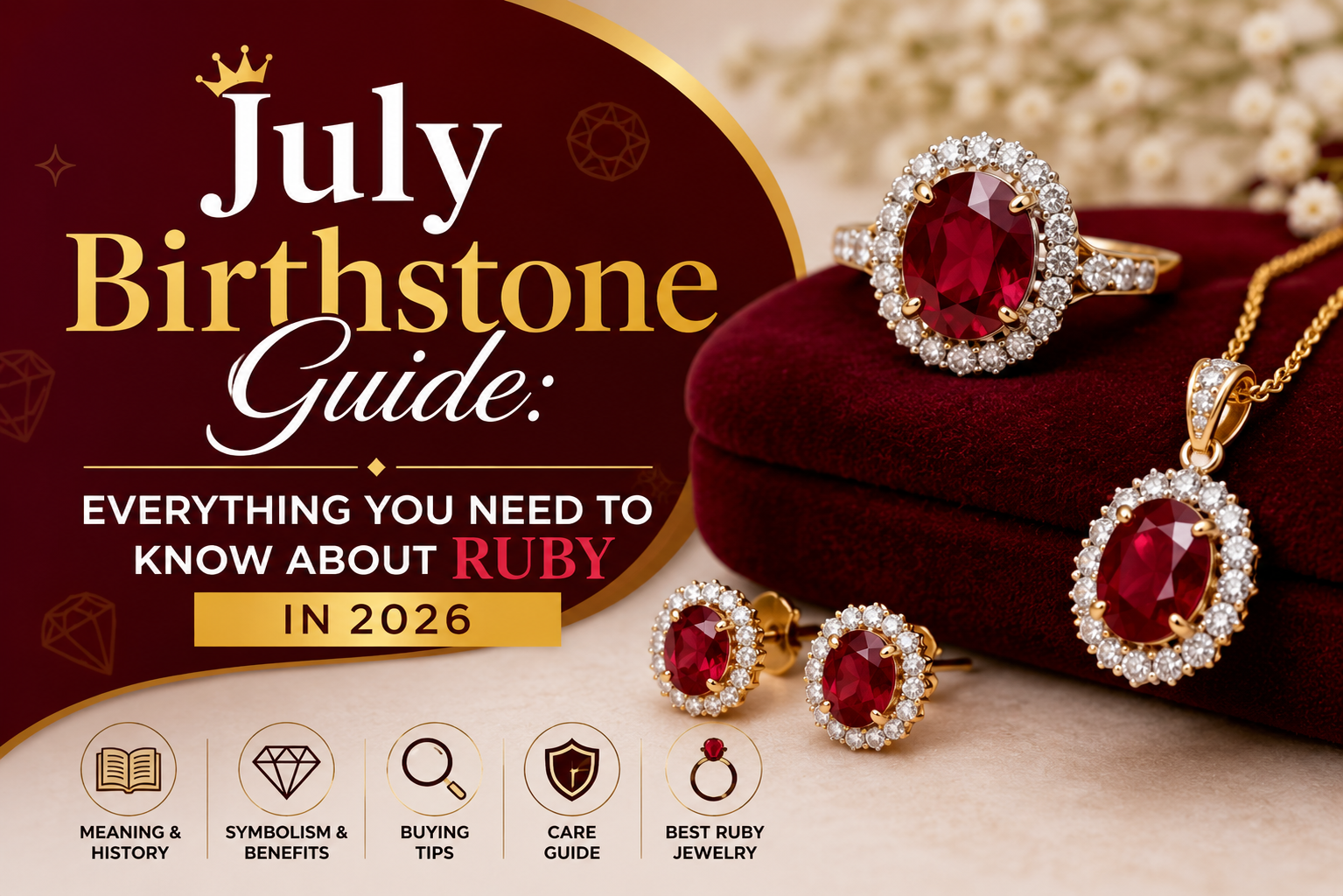
July Birthstone Guide: Everything You Need to Know About Ruby in 2026
Key Takeaways
-
Ruby is the official birthstone for July.
-
It belongs to the corundum mineral family and ranks 9 on the Mohs Hardness Scale.
-
Color is the most important factor when evaluating ruby quality.
-
Myanmar and Mozambique are among the world's leading sources of high-quality rubies.
-
Both natural and lab-grown rubies are beautiful options, each offering unique advantages.
-
Always buy certified ruby jewelry from a trusted jeweler.
-
Proper care and regular cleaning help preserve your ruby jewelry for years to come.
Introduction to the July Birthstone Guide
July is a month filled with warmth, celebration, and vibrant energy, making it the perfect time to honor one of the world's most treasured gemstones—the Ruby. Known for its mesmerizing deep red color and timeless elegance, ruby has captivated civilizations for thousands of years. Whether you're celebrating a July birthday, searching for a meaningful gift, or planning to invest in fine gemstone jewelry, this July Birthstone Guide will help you understand everything you need to know about ruby.
Ruby is really a stone. It is not a pretty gem. For a time, ruby has meant love and being brave. People also think it means being passionate and having a life. A long time ago, kings thought rubies would help them win battles. Now people like rubies because they are pretty and last a long time.
Today, ruby is still one of the precious stones, like diamonds, sapphires, and emeralds. This makes ruby a great choice for wearing every day or on special days.
In this guide, you will learn about ruby. You will learn about the history of ruby, what ruby means, where ruby comes from, what makes ruby good quality, how much ruby is worth, tips for buying ruby, how to take care of ruby, and the best kinds of ruby jewelry. If you are buying your ruby ring or if you already have some gemstones and you want more, this guide will help you make a good choice.
What Is the July Birthstone?
The birthstone for July is Ruby. Ruby is a valuable stone that is part of the corundum family. The red color of Ruby comes from bits of chromium. This is what gives Ruby its shades. These shades can be a pinkish-red or a deep red color that people really like, which is called "pigeon blood red".
Ruby is very hard. It gets a 9 on the Mohs Hardness Scale. This makes Ruby one of the stones you can find in nature. Because Ruby is so durable, it is great for things like rings, necklaces, earrings, and bracelets. Ruby is also perfect for engagement jewelry that you wear every day.
Quick Facts About Ruby
|
Property |
Details |
|
Birth Month |
July |
|
Gemstone |
Ruby |
|
Mineral Family |
Corundum |
|
Color |
Red (Light Red to Deep Crimson) |
|
Mohs Hardness |
9/10 |
|
Symbolism |
Love, Passion, Courage, Prosperity |
|
Anniversary |
15th & 40th Wedding Anniversary |
|
Best Jewelry |
Rings, Necklaces, Earrings, Bracelets |
Why Is Ruby the Birthstone for July?
Ruby is a special gemstone that people have liked for a long time, especially in July. This is because the red color of ruby reminds us of the warm days of summer.
People used to think that ruby was a symbol of the energy that keeps us alive, like the blood that flows through our bodies. That is why ruby was seen as a protective gemstone.
A long time ago, people thought ruby was the best gemstone of all, so they called it the "King of Gemstones". This is because ruby is very hard to find and it looks really beautiful. Warriors used to take rubies with them to battles to make them feel brave. Ruby was also used by families to show how rich and powerful they were, and they would put rubies on their crowns and special jewelry.
Today, ruby continues this legacy by representing:
-
Passion and everlasting love
-
Confidence and courage
-
Prosperity and success
-
Good fortune
-
Inner strength
-
Protection against negative energy
People born in July really like the ruby because it is a stone that shows they are passionate and determined and full of energy. The ruby is a meaningful birthstone for people born in July because it has a lot of emotional and historical meaning. The ruby is a birthstone that people born in July can really connect with.
Ruby Meaning and Symbolism
The ruby has stayed well-liked for a long time. One reason the ruby is still popular is that it has a lot of meaning. People from places and backgrounds think the ruby is special. The ruby always seems to mean feelings and good things to people. The ruby represents things like this in cultures.
Love and Passion
Ruby's vibrant red color naturally symbolizes romance and deep affection. It has long been exchanged as a token of everlasting love, making ruby jewelry an excellent choice for anniversaries, engagements, and romantic gifts.
Courage and Strength
Ancient warriors believed ruby could make them fearless in battle. Even today, ruby is often associated with confidence, determination, and personal empowerment.
Prosperity and Success
Many cultures considered ruby a stone of abundance. Merchants and rulers believed it attracted wealth, success, and favorable opportunities.
Protection
Historically, rubies were worn as protective talismans. Legends suggested they could shield the wearer from danger and negative influences while bringing good fortune.
Vitality and Energy
Because of its fiery red color, ruby is commonly associated with life, motivation, enthusiasm, and emotional strength. It symbolizes living with passion and embracing new opportunities.
Ruby Gemstone Meaning Across Different Cultures
Ruby's significance extends across continents and centuries, making it one of the most culturally important gemstones in history.
Ancient India
In ancient India, ruby was known as the "Ratnaraj," meaning King of Precious Stones. It was believed that offering rubies to deities would bring peace, prosperity, and favorable rebirth.
Indian royalty often decorated crowns, necklaces, and ceremonial weapons with rubies, believing the gemstone represented divine power and eternal prosperity.
Ancient Burma (Myanmar)
Myanmar has been giving us some of the rubies in the world for a very long time. The warriors from Burma thought that if they put rubies in their armor or even under their skin, they would be safe during a fight. People believed this so much that it made the ruby seem like a special stone that gives you courage and keeps you safe. Myanmar rubies are really something, and people have always loved them for being a stone of courage and protection, which is why Myanmar rubies are so famous.
Europe
In the days people like kings and nobles in Europe really liked rubies. They thought rubies were special because they meant you were wise and a good leader.
Rubies were often used in things like crowns and special jewelry that kings and nobles wore. This was because rubies showed that you were important and powerful.
A lot of people thought that if something bad was going to happen, the ruby would change color and get darker. This was like a warning to the person who owned the ruby.
China
The Chinese emperors really liked ruby because it meant they would have prosperity, be happy, and live a life. They used rubies to decorate their armor, the robes they wore for ceremonies, and the important things that showed they were emperors, which showed that they were rich and respected. The Chinese emperors thought rubies were very special.
The Fascinating History of Ruby
Ruby has been around for a long time over 2,500 years- which makes ruby one of the oldest gemstones that people have always loved. Ruby has been a part of amazing things from old temples and royal courts to very expensive jewelry collections today, and ruby is still one of the most liked gems in the world.
The name ruby comes from a word called ruber, which means the color red. This name is simple. It suits ruby perfectly because the main thing that makes ruby special is its bright red color.
For a time, people thought ruby was the same as other red gems like spinel and garnet. It was not until the century, when people learned more about minerals, that scientists found out that ruby is actually a part of the corundum family. What is really interesting is that sapphire is also a part of the corundum family, and the main difference between ruby and sapphire is the color of the gemstone.
Throughout history, rubies have appeared in:
-
Royal crowns
-
Ancient temples
-
Sacred artifacts
-
Wedding jewelry
-
Military decorations
-
Religious ornaments
-
Luxury heirloom collections
Their enduring popularity is a testament to their exceptional beauty and symbolic significance.
Ruby in Royal Jewelry
Royal families around the world have loved rubies for a long time. The kings and queens and emperors and nobles wore rubies on their crowns and brooches and necklaces and rings to show how rich and powerful they were.
Many old rubies that were in collections were not really rubies at all; they were something called red spinels. This happened because people did not know much about gems back then. Real rubies have always been very rare and very valuable, and only royalty and very important people got to have them.
Ruby in Modern Times
Today the ruby is still a popular gemstone that people want to buy for jewelry. The ruby is a choice that people love to use for engagement rings, anniversary presents, and special birthstone jewelry that gets passed down to family members.
Now it is easier for people to pick out quality rubies because of better ways to cut and check gemstones. The ruby looks great with sterling silver, yellow gold, white gold, or platinum. No matter what the ruby is set in, ruby jewelry is still a symbol of being fancy, having feelings, and being beautiful, for a long time. The ruby is a gemstone that people will always love.
Ruby Origin: Where Do the Finest Rubies Come From?
Today, ruby is still a popular gemstone that people want to buy. People love ruby because it is always in style, so they use it to make engagement rings, gifts for anniversaries, birthstone jewelry, and nice family heirlooms.
Where a ruby comes from is very important because it affects how beautiful and rare the ruby is and also how much it costs. Rubies are found in countries, but some places are famous for making really great rubies that are one of a kind. If you know where a ruby comes from, you can make a decision when you buy one, and you can also learn the story of the ruby.
Myanmar (Burma)
Myanmar, which used to be called Burma, has some of the famous rubies in the world. The Mogok Valley in Myanmar has been producing amazing rubies for a very long time. People really want these rubies because of their color, which is called "Pigeon Blood Red". This color is a bright and pure red with just a little bit of blue in it. Rubies from Burma are very hard to find. Usually cost a lot of money because they are so beautiful and have a lot of history. Myanmar rubies are really something, and people are willing to pay a high price for them.
Mozambique
Mozambique has been a place for nice rubies for twenty years now. People really like these rubies because they are a red color and you can see right through them. They are also pretty big. Mozambique rubies are really beautiful and worth a lot of money, which is why people want to use them in fancy jewelry all over the world. Mozambique rubies are getting more popular every day because of how nice they look and how valuable they're.
Thailand
Thailand has a history in the ruby trade and cutting gems. Thai rubies are known for their red color with brown or purple undertones. They look different from rubies, but people still love them for being strong and having a rich color. They are very durable. Have a beautiful, rich color. Thai rubies and the ruby trade are well known.
Sri Lanka
Sri Lanka is a place that is often called the Island of Gems. This place produces rubies that're lighter in color, and they have really nice pinkish-red tones. People like these Sri Lanka rubies because they are brilliant and they look great in jewelry that is made to look old. Sri Lanka rubies are a choice for this kind of jewelry.
Madagascar
Madagascar is a place where you can find a lot of rubies now. The rubies from Madagascar are really nice because they are very red and clear. This makes them something that people who like jewelry want to buy because they are pretty and not too expensive. Madagascar rubies are a choice for people who like rubies.
Tanzania and Afghanistan
Rubies are found in small amounts in Tanzania and Afghanistan too. Sometimes these places make nice rubies with special colors. The number of rubies they find is not very big. Rubies from these regions are very pretty and one of a kind. Rubies from Tanzania and Afghanistan have their unique look.
Buying Tip: A ruby's origin can influence its price, but exceptional color, clarity, cut, and certification are often more important than origin alone.
Ruby Color Guide
Color is really important when it comes to rubies. The beautiful rubies have a deep red color that is very bright and vivid. The best rubies display a red color with a lot of saturation and a tone that is just right. Ruby color is made up of three parts that gemologists look at when they evaluate rubies:
Hue
Hue refers to the gemstone's primary color. For rubies, the ideal hue is pure red, although slight secondary hues such as pink, purple, or orange may be present.
Tone
Tone describes how light or dark the ruby appears.
-
Very Light Red
-
Light Red
-
Medium Red
-
Medium-Dark Red
-
Dark Red
-
Very Dark Red
Medium to medium-dark tones are generally the most desirable because they maximize the gemstone's brilliance without appearing too dark.
Saturation
Saturation measures the intensity and purity of the color. Highly saturated rubies exhibit vivid, lively red hues that immediately attract attention.
Most Valuable Ruby Color
The most prized ruby color is commonly known as Pigeon Blood Red. This term describes a vivid, slightly bluish-red with exceptional brightness and saturation. Genuine untreated rubies displaying this color are extremely rare and among the world's most valuable colored gemstones.
Ruby Clarity Guide
Unlike diamonds, rubies naturally contain inclusions formed during their growth deep within the Earth. These inclusions are often referred to as the gemstone's "fingerprints" because they help identify natural rubies.
Completely flawless natural rubies are incredibly rare.
Clarity Grades
-
Eye Clean
-
Very Slightly Included (VS)
-
Slightly Included (SI)
-
Moderately Included (MI)
-
Heavily Included (HI)
Small inclusions generally do not affect a ruby's beauty and can even confirm its natural origin. However, excessive inclusions may reduce brilliance, transparency, and durability.
When purchasing ruby jewelry, prioritize gemstones that appear clean to the naked eye while maintaining vibrant color.
Ruby Cut Guide
A ruby's cut determines how effectively it reflects light and displays its natural beauty. A well-cut ruby appears brighter, more vibrant, and more visually appealing.
Popular Ruby Cuts
-
Oval Cut
-
Cushion Cut
-
Round Cut
-
Emerald Cut
-
Pear Cut
-
Princess Cut
-
Heart Cut
-
Marquise Cut
Because high-quality rough ruby is extremely valuable, cutters often prioritize preserving weight over achieving ideal proportions. This makes expertly cut rubies even more desirable.
A well-cut ruby should display:
-
Excellent symmetry
-
Even color distribution
-
Strong brilliance
-
Minimal dark areas
-
Smooth polish
Ruby Carat Guide
Carat measures a gemstone's weight rather than its physical size.
Generally:
-
1 Carat = 0.20 grams
As ruby size increases, rarity increases dramatically. Large, high-quality rubies are significantly rarer than similarly sized diamonds.
Common Ruby Sizes
|
Carat Weight |
Ideal For |
|
0.25–0.50 ct |
Delicate everyday jewelry |
|
0.50–1.00 ct |
Rings, earrings, pendants |
|
1.00–2.00 ct |
Engagement rings and luxury jewelry |
|
2.00–5.00 ct |
Investment-quality gemstones |
|
5+ ct |
Extremely rare collector gemstones |
A smaller ruby with exceptional color often commands a higher price than a larger ruby with poor color or heavy inclusions.
Ruby Quality Factors (The 4Cs)
Like diamonds, ruby quality is evaluated using four essential characteristics.
1. Color
Color contributes the most to a ruby's value. Rich, vivid red gemstones with excellent saturation are the most desirable.
2. Clarity
Natural inclusions are expected, but excessive fractures or cloudy areas reduce beauty and durability.
3. Cut
A well-cut ruby maximizes brilliance and highlights the gemstone's natural color.
4. Carat Weight
Larger rubies become exponentially rarer and more valuable when combined with excellent color and clarity.
Expert Tip: Always prioritize Color > Cut > Clarity > Carat Weight when selecting a ruby.
Ruby Hardness (Mohs Scale)
Ruby ranks 9 out of 10 on the Mohs Hardness Scale, making it one of the hardest natural gemstones available.
Mohs Hardness Comparison
|
Gemstone |
Hardness |
|
Diamond |
10 |
|
Ruby |
9 |
|
Sapphire |
9 |
|
Topaz |
8 |
|
Emerald |
7.5–8 |
|
Quartz |
7 |
Its exceptional hardness makes ruby highly resistant to scratches, making it an excellent choice for engagement rings, wedding jewelry, and everyday wear.
Ruby Price Guide: How Much Is a Ruby Worth?
Ruby prices vary significantly depending on several quality factors.
Factors Affecting Ruby Value
-
Color quality
-
Origin
-
Clarity
-
Cut quality
-
Carat weight
-
Natural vs. laboratory-grown
-
Treatment status
-
Certification
People really like natural rubies because they have a beautiful, vivid red color. These rubies are special because they have treatment and come with certification from reputable people. This makes natural rubies some of the most valuable colored gemstones in the world.
On the other hand, rubies that have been treated or grown in a lab are usually cheaper. They are still very pretty. When you want to buy a ruby, do not just think about the price. You should think about the quality of the ruby, whether it is real, and if it is what you need. You should evaluate the ruby to make sure it is good for what you want to use it for. Fine natural rubies are great. You have to consider these things when you buy rubies.
Ruby Benefits & Healing Properties
For centuries, ruby has been associated with emotional strength, confidence, and vitality. Across many cultures, it has symbolized passion, courage, prosperity, and positive energy.
Many people believe ruby represents:
-
Passion and unconditional love
-
Self-confidence
-
Courage and leadership
-
Motivation and determination
-
Prosperity and abundance
-
Emotional balance
-
Inner strength
Some crystal enthusiasts also associate ruby with the Root Chakra, believing it encourages grounding and personal empowerment.
Natural Ruby vs. Lab-Grown Ruby
When you are buying ruby jewelry, people often want to know if they should get a ruby or a ruby that is made in a lab. Both of these rubies are really pretty. They are different because of where they come from, how rare they are, how much they are worth, and how much they cost. If you know about these differences, you can pick the best ruby for you and your money. You can choose the ruby that you like. That fits your budget. Ruby jewelry is a big decision, so it is good to know about natural rubies and lab-grown rubies.
What Is a Natural Ruby?
A natural ruby is made inside the Earth over a very long time, like millions of years. It is made with a lot of heat and pressure. Every natural ruby is different; it has its special color, and it has things inside it that make it unique. Natural rubies are very hard to find, so the good ones are very valuable, and they are among the most valuable colored stones in the world the natural rubies.
Pros of Natural Ruby
-
Naturally formed over millions of years
-
Extremely rare and collectible
-
Higher long-term value
-
Unique inclusions that verify authenticity
-
Preferred for heirloom and investment jewelry
Cons
-
More expensive than lab-grown rubies
-
Larger, high-quality stones are difficult to find
What Is a Lab-Grown Ruby?
A lab-grown ruby is made in a lab with tools that help it grow like a real ruby. This process is pretty cool because it makes the lab-grown ruby have the stuff inside as a natural ruby. The lab-grown ruby is just as hard as a ruby. The big difference is that lab-grown rubies do not take as long to make as natural rubies do. Lab-grown rubies are also called rubies. They have the same chemical stuff and the same crystal structure as natural rubies and lab-grown rubies.
Pros of Lab-Grown Ruby
-
More affordable
-
Excellent color consistency
-
Fewer visible inclusions
-
Environmentally efficient production
-
Ideal for budget-conscious buyers
Cons
-
Lower resale value
-
Less rare than natural rubies
-
Not suitable for buyers seeking naturally formed gemstones
Natural Ruby vs. Lab-Grown Ruby Comparison
|
Feature |
Natural Ruby |
Lab-Grown Ruby |
|
Formation |
Natural |
Laboratory Created |
|
Rarity |
Very Rare |
Easily Produced |
|
Chemical Composition |
Corundum |
Corundum |
|
Hardness |
9 Mohs |
9 Mohs |
|
Appearance |
Unique Inclusions |
Cleaner Appearance |
|
Price |
Higher |
More Affordable |
|
Investment Value |
Excellent |
Limited |
|
Best For |
Collectors, Fine Jewelry |
Everyday Wear, Budget-Friendly Jewelry |
Which One Should You Choose?
Choose a natural ruby if you value rarity, uniqueness, and long-term investment potential. Choose a lab-grown ruby if you want exceptional beauty at a more affordable price without compromising durability.
How to Identify a Real Ruby
Because rubies are highly valuable, it's important to know how to distinguish a genuine ruby from imitations or lower-quality alternatives. While professional gemological testing provides the most accurate identification, there are several characteristics you can look for before making a purchase.
1. Examine the Color
Natural rubies typically display a vibrant red with slight natural variations. If the color appears unnaturally bright, perfectly uniform, or glass-like, additional verification may be needed.
2. Look for Natural Inclusions
Most natural rubies contain tiny internal inclusions, often called nature's fingerprints. Completely flawless rubies are extremely rare and usually command premium prices.
3. Check the Hardness
Ruby ranks 9 on the Mohs Hardness Scale, making it highly resistant to scratches. Softer materials such as glass or imitation stones scratch much more easily.
4. Request a Gemstone Certificate
Always purchase valuable ruby jewelry accompanied by certification from a reputable gemological laboratory. A certificate confirms important details such as:
-
Natural or laboratory-grown
-
Treatment disclosure
-
Carat weight
-
Color
-
Clarity
-
Origin (when determinable)
5. Buy from a Trusted Jeweler
Purchasing from a reputable jewelry brand ensures transparency, authenticity, and quality assurance. Always ask about return policies, gemstone certification, and warranty before completing your purchase.
Expert Tip: Certification is one of the most reliable ways to verify a ruby's authenticity and quality.
How to Buy a Ruby
Buying a ruby is an exciting investment, whether you're purchasing birthstone jewelry, an engagement ring, or a meaningful gift. Understanding the essential quality factors will help you choose a gemstone you'll treasure for years.
Prioritize Color
Color has the greatest impact on a ruby's value. Look for vibrant, evenly distributed red hues with strong saturation.
Consider Clarity
Minor inclusions are natural and acceptable, but avoid gemstones with large fractures or cloudy areas that reduce brilliance.
Evaluate the Cut
A well-cut ruby reflects light beautifully and showcases its color evenly from every angle.
Select the Right Carat Size
Choose a size that suits your style and budget. Remember that color quality often matters more than carat weight.
Verify Certification
For significant purchases, always request certification from a recognized gemological laboratory.
Choose the Right Metal
Ruby pairs beautifully with:
-
925 Sterling Silver
-
Yellow Gold
-
White Gold
-
Rose Gold
-
Platinum
The right metal enhances the ruby's natural beauty while matching your personal style.
Ruby Engagement Rings
Ruby engagement rings have become increasingly popular among couples seeking a meaningful alternative to traditional diamond rings. Their rich red color symbolizes love, commitment, passion, and lifelong devotion.
Why choose a ruby engagement ring?
-
Unique and eye-catching
-
Exceptional durability (9 Mohs)
-
Rich romantic symbolism
-
Timeless elegance
-
Suitable for everyday wear
Popular settings include solitaire, halo, vintage-inspired, three-stone, and diamond-accented designs.
Ruby Rings
Ruby rings are timeless jewelry pieces suitable for birthdays, anniversaries, engagements, and everyday elegance. Whether you prefer minimalist styles or statement designs, ruby rings offer a perfect combination of sophistication and vibrant color.
Popular ring styles include:
-
Solitaire Ruby Rings
-
Halo Ruby Rings
-
Vintage Ruby Rings
-
Cocktail Ruby Rings
-
Stackable Ruby Rings
-
Floral Ruby Rings
Ruby Necklaces
A ruby necklace adds a luxurious touch to any jewelry collection. From delicate solitaire pendants to elaborate statement pieces, ruby necklaces complement both casual and formal outfits.
Popular styles include:
-
Solitaire Pendants
-
Heart Necklaces
-
Halo Pendants
-
Vintage Necklaces
-
Diamond & Ruby Necklaces
-
Personalized Ruby Pendants
Ruby necklaces also make thoughtful gifts for birthdays, anniversaries, and special celebrations.
Ruby Earrings
Ruby earrings provide a classic splash of color while remaining elegant and versatile.
Popular styles include:
-
Stud Earrings
-
Halo Earrings
-
Drop Earrings
-
Dangle Earrings
-
Hoop Earrings
-
Floral Earrings
Their vibrant red hue pairs beautifully with both contemporary and traditional fashion.
Ruby Bracelets
Ruby bracelets offer understated elegance and can be worn alone or layered with other jewelry.
Popular designs include:
-
Chain Bracelets
-
Charm Bracelets
-
Bangle Bracelets
-
Station Bracelets
-
Adjustable Bracelets
Ruby bracelets make excellent gifts for birthdays, graduations, and anniversaries.
July Birthstone Jewelry Buying Guide
When shopping for July birthstone jewelry, consider these important factors:
✔ Choose natural or lab-grown according to your budget.
✔ Prioritize vibrant red color over larger size.
✔ Verify gemstone certification for valuable purchases.
✔ Select durable settings for everyday wear.
✔ Match the jewelry style to the recipient's lifestyle.
✔ Purchase from a trusted jeweler offering quality assurance and transparent policies.
A carefully selected ruby jewelry piece can become a cherished heirloom passed down through generations.
July Birthday Gift Ideas
Ruby jewelry is one of the most meaningful gifts for someone born in July. Its symbolism of love, strength, and prosperity makes it suitable for a wide range of occasions.
Popular gift ideas include:
-
Ruby Rings
-
Ruby Necklaces
-
Ruby Earrings
-
Ruby Bracelets
-
Ruby Pendants
-
Couples' Jewelry
-
Stackable Rings
-
Birthstone Gift Sets
Adding a personalized engraving or custom design makes the gift even more memorable.
Ruby Anniversary Gifts
Ruby is traditionally associated with the 15th and 40th wedding anniversaries, representing enduring love, commitment, and passion.
Meaningful ruby anniversary gifts include:
-
Ruby Engagement Rings
-
Ruby Eternity Bands
-
Ruby Pendants
-
Ruby Tennis Bracelets
-
Ruby Earrings
-
Matching Couples' Jewelry
A ruby gift beautifully celebrates years of shared memories and lifelong commitment.
Ruby Care Guide
Ruby is highly durable, but proper care helps preserve its brilliance for generations.
Daily Care Tips
-
Store ruby jewelry separately to prevent scratches on softer gemstones.
-
Remove jewelry before heavy physical activities.
-
Avoid exposure to harsh chemicals such as bleach or chlorine.
-
Apply perfume, hairspray, and cosmetics before wearing jewelry.
-
Clean your jewelry regularly to maintain its sparkle.
How to Clean Ruby Jewelry
Cleaning ruby jewelry is simple and helps maintain its natural brilliance.
Steps:
-
Fill a bowl with lukewarm water.
-
Add a few drops of mild dish soap.
-
Soak the jewelry for 10–15 minutes.
-
Gently clean with a soft-bristled brush.
-
Rinse thoroughly with clean water.
-
Dry using a soft, lint-free microfiber cloth.
Avoid ultrasonic or steam cleaners for rubies with fractures or significant inclusions unless a qualified jeweler confirms they are safe.
Conclusion on July Birthstone Guide
Ruby is far more than a beautiful red gemstone—it's a timeless symbol of love, passion, courage, and enduring elegance. Whether you're celebrating a July birthday, marking a milestone anniversary, choosing an engagement ring, or simply adding a vibrant piece to your jewelry collection, ruby offers a meaningful combination of beauty, history, and lasting value.
This comprehensive July Birthstone Guide has explored ruby's origins, symbolism, history, quality factors, buying tips, jewelry styles, and care instructions to help you make a confident, informed decision. By understanding what makes a ruby truly exceptional, you can select a gemstone that will be treasured for generations.
Discover Exquisite Ruby Jewelry at Shine Jewel
Celebrate the timeless beauty of ruby with expertly crafted jewelry from Shine Jewel.
Our collection includes elegant ruby rings, necklaces, earrings, bracelets, pendants, and birthstone jewelry, all carefully crafted from premium materials and featuring exceptional craftsmanship. Whether you're searching for the perfect birthday gift, anniversary surprise, or a statement piece for your personal collection, you'll find designs that combine quality, elegance, and lasting beauty.
Browse our handcrafted ruby jewelry collection today and find a piece that tells your unique story.
Frequently Asked Questions About the July Birthstone Guide
What is the July birthstone?
The official July birthstone is Ruby, a precious gemstone from the corundum mineral family. Ruby is admired for its rich red color, exceptional durability (9 on the Mohs Hardness Scale), and symbolism of love, courage, passion, and prosperity. It is one of the world's four precious gemstones alongside diamond, sapphire, and emerald.
How can you identify a real ruby?
A genuine ruby typically has natural inclusions, vibrant red color, and excellent hardness. The safest way to verify authenticity is by purchasing a certified gemstone from a trusted jeweler. Always request a gemstone certificate that confirms whether the ruby is natural or lab-grown and discloses any treatments.
Are natural rubies better than lab-grown rubies?
Both have their advantages.
-
Natural Rubies are rare, formed by nature over millions of years, and generally have higher long-term value.
-
Lab-Grown Rubies have the same chemical composition and durability but are more affordable and often have fewer visible inclusions.
The right choice depends on your budget, preferences, and whether rarity or affordability is your priority.
How much is a ruby worth?
Ruby prices vary depending on several quality factors, including color, clarity, cut, carat weight, origin, treatments, and certification. Fine-quality natural rubies with vivid red color are among the most valuable colored gemstones in the world, while lab-grown rubies provide a more budget-friendly alternative.
How do you clean and care for ruby jewelry?
To keep ruby jewelry looking its best:
-
Clean with warm water and mild soap.
-
Use a soft-bristled brush to remove dirt.
-
Dry with a lint-free microfiber cloth.
-
Store pieces separately to prevent scratches.
-
Avoid harsh chemicals and have valuable jewelry professionally inspected once a year.
Why is ruby the birthstone for July?
Ruby is the traditional birthstone for July because it symbolizes passion, strength, protection, and prosperity. Its vibrant red color reflects the warmth and energy of midsummer.
What does the ruby birthstone symbolize?
Ruby symbolizes love, courage, confidence, vitality, success, and lasting commitment. It has been treasured by cultures around the world for centuries.
Can ruby be worn every day?
Yes. With a hardness rating of 9 on the Mohs Hardness Scale, ruby is one of the most durable gemstones available and is well suited for everyday jewelry such as rings, pendants, earrings, and bracelets.
Which country produces the best rubies?
Myanmar (Burma) is renowned for producing some of the world's finest rubies, especially those with the famous "Pigeon Blood Red" color. Mozambique is also an important modern source of exceptional-quality rubies.
Is ruby a good gemstone for engagement rings?
Absolutely. Ruby engagement rings are prized for their durability, rich symbolism, and timeless beauty, making them an excellent alternative to traditional diamond engagement rings.