Real Ruby vs Imitation Ruby: How to Spot a Genuine Manik Stone Before Buying
A real ruby stone is a gem that comes from the mineral corundum. It gets its red color from tiny bits of chromium.
An imitation ruby might look similar. It is not formed naturally. It also does not last long and is not as rare or as valuable as a real ruby. If you want to know how to tell if a ruby is real, this guide is for you. It will help you learn the difference between fake rubies. You will also learn about tests to check rubies, certification, and tips for buying rubies.
What is a Real Ruby Stone?
A real ruby stone is something that comes from the Earth. It takes millions of years to make a ruby stone. Ruby stones are part of the corundum family. They are very hard, with a rating of 9 on the Mohs scale. This means that ruby stones are among the stones found in nature right after diamonds.
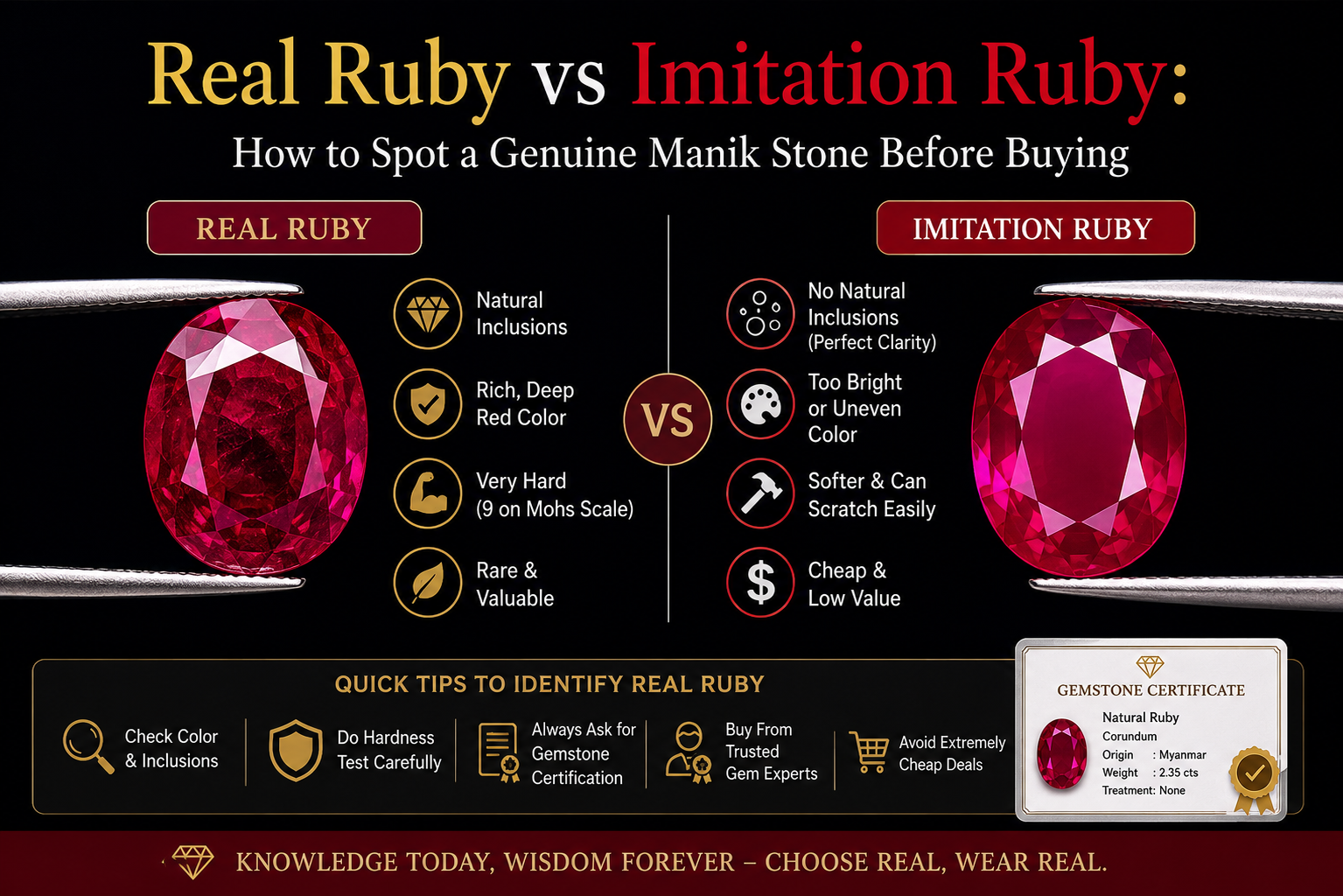
A real ruby gemstone will have things inside it. These are called inclusions. They happen when the ruby stone is growing. Ruby stones with these inclusions are easy to tell from fake ones. Experts who study gemstones, called gemologists, look for these inclusions to figure out if a ruby stone is real or not. They help us know if we have a ruby stone or a fake one.
Key features of a natural ruby gemstone:
• Made from natural corundum mineral
• Rich red to slightly pinkish-red color
• High hardness and durability
• Natural internal inclusions
• Valuable and rare gemstone
• Can be certified by gemstone laboratories
A certified genuine Manik stone is preferred by collectors, jewelry lovers, and gemstone buyers because of its natural origin and long-term value.

What is an Imitation Ruby Stone?
An imitation ruby is a stone that looks like a ruby, but it's made from different stuff. These stones look like rubies, but they don't have the same insides or natural qualities. They are made to copy the look of a ruby.
Common imitation ruby materials include:
• Red glass
• Colored synthetic stones
• Artificial crystal
• Low-quality treated gemstones
Imitation rubies are usually cheaper and mainly used for fashion jewelry. They may have a bright red color but lack the natural beauty, hardness, and value of a real ruby.
Understanding Real Ruby vs Imitation Ruby helps buyers avoid paying natural gemstone prices for artificial stones.

Real Ruby vs Imitation Ruby: Major Differences
1. Natural Formation
A real ruby gemstone forms naturally, inside the Earth. This happens through processes that take a very long time. It actually takes millions of years for a ruby gemstone to develop. On the hand, an imitation ruby is created artificially. This is done to copy the appearance of a natural ruby gemstone.
2. Color Appearance
A real ruby stone is usually a deep red color. The best rubies are a strong red. Fake ruby stones can look too bright or too perfect; the color can look really unnatural. Real ruby stones that are real, like a good quality ruby stone, have a rich red color.
3. Inclusions and Clarity
Many people believe a flawless ruby means better quality, but natural rubies commonly have small inclusions.
Real Ruby:
-
Natural inclusions visible under magnification
-
Unique internal patterns
-
Natural growth marks
Imitation Ruby:
-
Too perfect appearance
-
Air bubbles in glass imitations
-
Artificial-looking clarity
4. Hardness Difference
Ruby is really tough. It is a hard gemstone with a Mohs hardness of 9. A real ruby stone can withstand a lot of wear and tear. It is highly resistant to scratches. On the other hand, glass imitation ruby stones are softer and easier to damage. This is because ruby is a hard gemstone.
5. Price and Value
Natural ruby gemstones are rare and valuable. Imitation ruby stones are inexpensive because they are mass-produced and do not have gemstone rarity.
How to Identify Real Ruby Stone?
If you want to know how to check ruby is real or fake, these methods can help you understand basic identification.
1. Check Ruby Color
A genuine ruby gemstone usually has a natural red shade. The color should look rich but not artificial. Extremely bright red stones with perfect clarity may require professional testing because they could be synthetic or imitation.
2. Look for Natural Inclusions
Use a magnifying glass to check inside the gemstone. A natural ruby gemstone often contains small inclusions because it forms naturally. Fake glass ruby may show bubbles or an overly clean appearance.
3. Ruby Stone Test for Hardness
Ruby is one of the hardest gemstones. A real ruby does not scratch easily compared to many imitation materials. However, avoid doing scratch tests yourself because it may damage jewelry settings or treated stones.
4. Professional Gemstone Testing
The most reliable ruby stone test is performed by professional gem laboratories.
Experts check:
• Chemical composition
• Natural origin
• Treatments
• Color quality
• Internal structure
How to Identify Original Manik Stone at Home?
A lot of people who want to buy Manik stone are looking for ways to figure out if it is real at home. You cannot really be sure, without getting it checked in a lab. There are some things you can look for with the Manik stone.
Check these signs:
• Natural color variation
• Strong gemstone surface
• No visible glass bubbles
• Not extremely lightweight
• Natural-looking clarity
Remember, some synthetic rubies can look very close to natural ruby, so certification is always recommended.
Difference Between Natural Ruby and Glass-Filled Ruby
When we talk about rubies, we have to look at ruby and glass-filled ruby. A natural ruby is a ruby that forms on its own in the earth. On the other hand, a glass-filled ruby is a ruby that people work on to make it look better. They fill in the cracks in the glass-filled ruby with glass to make it look nicer. This is a difference between a natural ruby and a glass-filled ruby. Natural ruby and glass-filled ruby are not the same thing, and people should know what they are getting when they buy a ruby.
Natural Ruby:
-
Higher value
-
Better durability
-
Natural formation
Glass-Filled Ruby:
-
Lower value
-
Requires careful handling
-
Enhanced appearance
Knowing the difference between natural ruby and glass-filled ruby helps buyers choose the right gemstone.
How to Check Original Ruby Stone with Certification?
The safest way to confirm a genuine Manik stone is gemstone certification.
A ruby certificate provides details like:
• Natural or synthetic origin
• Gemstone weight
• Color details
• Treatment information
• Quality analysis
Always buy a certified natural ruby gemstone from trusted sellers.
What Does a Real Ruby Gemstone Look Like?
A real ruby gemstone usually has a luxurious red appearance with natural characteristics.
Common signs:
• Deep red color tone
• Brilliant shine after cutting
• Natural internal features
• Strong durability
• Premium gemstone feel
Each natural ruby is unique because no two gemstones form exactly the same way.
Best Ways to Identify Natural Ruby Gemstone Before Buying
Before purchasing a ruby stone:
-
Buy from a trusted gemstone seller
-
Ask for certification
-
Compare quality and price
-
Understand treatments
-
Avoid deals that look unrealistically cheap
These simple steps can help you choose a genuine ruby gemstone.
Final Thoughts: Real Ruby vs Imitation Ruby
Understanding Real Ruby vs Imitation Ruby is important before investing in a Manik stone. A real ruby stone offers natural beauty, rarity, durability, and long-term value, while imitation ruby mainly provides a similar appearance at a lower cost.
Learning how to identify real ruby, checking gemstone characteristics, and choosing certified stones are the best ways to avoid fake ruby purchases. Whether buying ruby jewelry or a loose gemstone, always verify authenticity and choose a trusted source for a genuine Manik stone.
FAQs About Real Ruby vs Imitation Ruby
1. How can you tell if a ruby gemstone is real?
A real ruby usually has natural inclusions, strong hardness, rich color, and can be verified through gemstone certification.
2. What is the best ruby stone test?
Professional laboratory testing is the most accurate way to confirm whether a ruby is natural or imitation.
3. Can I identify real ruby at home?
Basic checks like color, inclusions, and appearance can help, but certification gives accurate confirmation.
4. Is synthetic ruby the same as fake ruby?
Synthetic ruby has the same chemical composition as ruby but is created in a laboratory, while imitation ruby only copies the appearance.
5. Is natural ruby gemstone expensive?
Yes, high-quality natural ruby gemstones are valuable because of their rarity, beauty, and durability.